Need advice? Let's talk.
Get straightforward guidance from your broadcasting partner. Schedule a call to chat with the team about your radio station.
Book DemoStreaming Music for Business: The Best Options for Every Budget
Discover the top streaming music for business options for 2026. Compare licensing, costs, and hardware to find the perfect sound for your brand.


The sound of a business serves as the invisible architecture of a brand. High-end boutiques in London, cool cafés in Manchester, and corporate offices in Sydney use music selection to dictate the energy of a room and influence the duration of a customer visit (also known as dwell time). Selecting the right retail store sound system involves more than just picking a playlist; it requires a strategic approach to technology, brand alignment, and legal compliance.
In 2026, the marketplace for streaming music for business is more diverse than ever. Business owners no longer have to settle for a generic radio receiver or a consumer-grade speaker. Instead, they must choose between background music providers, curated software-only solutions, or bespoke in-store radio stations. The goal is to find a balance between ease of use, cost-effectiveness, and the ability to grow with the brand.
The Legal Reality: Beyond Personal Accounts
A common misconception in the business world is that a personal Spotify, Apple Music, or YouTube Premium account is sufficient for commercial use. However, these services are legally restricted for private use only. Playing music from a personal account in a public space (regardless of whether you charge for entry) constitutes a public performance under international copyright law.
To remain compliant, two distinct licensing elements are necessary:
- A Commercial Streaming Platform: This is a service that has secured the rights to provide music for commercial use. These platforms ensure that the artists and labels are compensated for the public nature of the stream.
- Public Performance Licenses (PPL): Depending on the jurisdiction, businesses must pay fees to organisations like PPL PRS in the UK or ASCAP, BMI, and SESAC in the US.
Some platforms bundle these costs into their monthly subscription, whilst others require the business owner to pay the local royalty collection agency directly. Failure to secure these rights can lead to significant financial penalties from copyright enforcement bodies like the Recording Industry Association of America (RIAA) or the Phonographic Performance Limited (PPL) in Britain.
Streaming Music for Business: Comparison at a Glance
The following table provides an overview of how top providers currently operate in 2026, helping you narrow down choices based on budget and infrastructure.
Service | Best For | Price (Approx.) | Licensing Included? | Hardware Required? |
Soundtrack Your Brand | Playlist Precision | £30/$35 per month | Varies by region | No (App/Web) |
Pandora CloudCover | Budget & Efficiency | £15/$17 per month | Yes (US/Canada) | Optional |
Rockbot | Interactive Venues | £25/$30 per month | Yes (US/Canada) | Optional |
Mood Media | Enterprise Hardware | Custom Pricing | Yes | Yes (Media Player) |
Radio.co | Brand Ownership | Scalable Plans | Support provided | No (Cloud-based) |
1. Budget-Friendly Background Music
Small business owners and startups often require solutions that are affordable and require minimal daily maintenance. In these scenarios, the goal is often clean background music that avoids explicit lyrics and maintains a consistent volume level.

Pandora CloudCover
CloudCover remains a popular choice for those seeking a set it and forget it solution. It is designed to remove the stress of curation by offering hundreds of pre-programmed stations.
- The Setup: The service can run via a web browser, a mobile app, or their proprietary CloudBox hardware.
- The Content: Curations are grouped by industry, such as Active Retail or Relaxed Spa.
- Utility: It is particularly useful for small businesses that do not have the time to manage daily playlists but want to ensure the music is always appropriate for a public setting.
Rockbot
Rockbot serves a specific niche: social environments like gyms, bars, and bowling alleys. It introduces a level of interactivity that standard background music services lack.
- Social Integration: Customers can use a mobile app to see what is playing and, in some settings, request or vote for upcoming songs.
- Scheduling: The platform allows for intricate scheduling, ensuring the energy peaks and troughs match the business's foot traffic patterns.
- Versatility: It also offers digital signage capabilities, allowing businesses to sync their music with TV displays for promotional content.
2. Professional Curation and Software Flexibility
As a brand grows, the need for a specific sonic identity becomes more pressing. Boutique hotels or high-end showrooms often find that generic stations do not reflect their luxury status.

Soundtrack Your Brand
Soundtrack Your Brand is widely recognised as one of the most flexible software-based solutions for business. It was built with the user experience of consumer streaming in mind, making it very intuitive for staff to use.
- Spotify Integration: One of its strongest features is the ability to import Spotify playlists. The system identifies the tracks and provides the business with the legal version for public performance.
- Day-Parting: Users can automate the atmosphere by scheduling different moods for different times of the day. This is vital for a venue like a hotel lobby that may transition from a quiet morning atmosphere to a vibrant evening cocktail hour.
- Device Compatibility: It is highly compatible with existing hardware, including Sonos speakers, making it easy to integrate into a space that already has a sound system.
3. The Enterprise Model: Hardware and High Reliability
In large-scale retail or hospitality, the risk of a silent floor due to internet failure is a major concern. Enterprise solutions often focus on hardware reliability and bespoke sound design.
Mood Media
Mood Media is an industry veteran that focuses on sensory branding. They do not just provide music; they provide the physical infrastructure to play it.
- On-Site Storage: Their proprietary media players, such as the Harmony, store music files locally. This means that if the building's internet connection drops, the music continues to play from the hard drive without interruption.
- Visual Integration: Mood Media often bundles music with digital signage and even scent marketing, providing a holistic approach to the customer experience.
- Consultative Approach: They work with brands to create custom soundtracks that are exclusive to that business, ensuring the sound is never duplicated by a competitor.
4. Custom Radio: The Evolution of Branded Audio
While traditional streaming services provide a curated list of songs, a growing number of businesses are moving toward building their own private radio stations. This approach shifts the audio from a background service to a front-facing marketing asset.
Platforms like Radio.co provide the infrastructure to create a fully branded, cloud-based radio station. This is a distinct departure from standard streaming. In a standard stream, you are playing someone else's playlist. With a custom station, you are the broadcaster.
The Benefits of In-Store Radio
- Internal Communication: A branded station allows for the insertion of voice-overs and advertisements. A supermarket can use this to announce a 30-minute flash sale, whilst an office can use it to share internal news with employees.
- Global Brand Consistency: For a franchise with hundreds of locations, ensuring every store sounds identical is a challenge. Starting an in-store radio station allows a central marketing team to push the same stream to every location worldwide instantly.
- Hardware Independence: Because the platform is cloud-based, it does not require proprietary, expensive hardware. It can be streamed via a simple browser, a tablet, or even integrated into existing professional PA systems.
- Beyond the Four Walls: A custom station can also be embedded on the company website. This allows customers to engage with the brand's sound long after they have left the store, creating a deeper brand connection.
Hardware Essentials for Business Audio
No matter which streaming service you choose, the output is only as good as the hardware delivering it. Commercial environments require more robust equipment than a typical home setup.
1. The Source Device
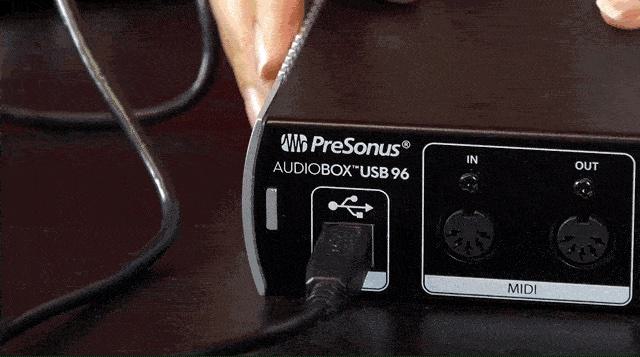
The source device is what connects to the internet to pull the stream. In a professional setting, avoid using an employee's personal phone. A dedicated tablet, a Mac Mini, or a small form factor PC is ideal. These devices should be hardwired to the router via Ethernet to prevent the buffering issues common with Wi-Fi.
2. The 70V/100V Amplifier System
Residential amplifiers are designed to power a pair of speakers over short distances. In a business, you may need 10 or 20 speakers spread across a large floor plan. A 70V or 100V amplifier system is the industry standard. It allows you to daisy-chain multiple speakers over long wire runs without losing signal quality.
3. Speaker Placement
- Pendant Speakers: Ideal for industrial spaces with open, high ceilings. They hang down to provide a direct sound to the floor.
- In-Ceiling Speakers: These provide the cleanest aesthetic for offices, spas, and high-end retail.
- Surface Mount Speakers: Best for outdoor patios or areas where ceiling installation is not an option.

Choosing Based on Your Budget and Scale
The Entry Budget (£15 to £25 / month)
For a single-location coffee shop or a small creative studio, the priority is legal compliance and ease of use. Services like Pandora CloudCover provide the necessary licensing and clean content at a low price point. The hardware setup is simple: a tablet plugged into a standard amplifier.
The Mid-Tier Budget (£30 to £70 / month)
For businesses where the vibe is a product in itself (such as a boutique gym or a trendy restaurant) generic stations are insufficient. Soundtrack Your Brand or a standard Radio.co plan offers the curation tools needed. This allows for radio imaging and day-parting to ensure the music matches the energy of the crowd.
The Enterprise Budget
Large-scale operations with multiple departments or global locations require a more robust solution. Mood Media provides high-reliability hardware, while a corporate radio solution from Radio.co offers the ability to broadcast internal corporate communications and branded messaging across an entire organisation.

The Strategic Advantage of Branded Content
As we move further into 2026, the distinction between playing music and broadcasting continues to blur. While background music services are excellent for filling silence, they remain a passive experience.
For a business looking to maximise its investment in audio, custom radio offers a significant advantage. It allows for total control of the narrative. When a customer hears a specific song followed by a professionally recorded voice-over that perfectly matches the brand's tone, the audio becomes an active participant in the sales process.
Radio.co offers a middle ground between the DIY complexity of setting up a server and the restrictive nature of enterprise-only contracts. By providing a cloud-based dashboard, it allows small to medium businesses to have the same on-air presence as a national broadcaster like the BBC.
Summary: Building an Atmosphere
Streaming music for business has evolved beyond simple compliance. It is now a critical component of customer experience and employee satisfaction. Whether a business chooses a budget-friendly subscription, a hardware-heavy enterprise solution, or a custom branded radio station, the chosen system must meet three criteria: it must be legal, it must be reliable, and it must represent the brand's unique identity.
By moving away from consumer accounts and toward professional solutions, business owners protect themselves from legal risk whilst gaining powerful tools to influence consumer behaviour and brand perception.


