Need advice? Let's talk.
Get straightforward guidance from your broadcasting partner. Schedule a call to chat with the team about your radio station.
Book DemoHow Radio Station Owners Will Make Money in 2026 (Beyond Traditional Ads)
Traditional radio ads are no longer enough to finance a station. Explore how radio stations owners will make money in 2026 and examples of stations already using these strategies.


The days where radio stations could rely solely on traditional ads are long gone. That model is reserved for the biggest players, and even then is a risky game. The reality for most radio stations owners is they need to have several revenue streams.
We'll dig in to 10 ways radio station owners can make money in 2026, as well as examples of successful radio stations already putting them to good use.
Key Takeaways:
- The value of traditional radio ads is often tied to listener numbers making them financially unviable for moderate sized radio stations.
- Traditional radio ads clash against the branding of many independent radio stations, making them unsuitable.
- There are alternative ways to generate income, so radio station teams can pick and choose the right strategies for them.
- Radio station owners can leverage their audio content with deep audience insight to pick revenue streams that are a good fit.
- Radio stations can garner support from listeners through subscription & membership models, crowdfunding, and merchandise.
- For external financial support, radio stations can apply for grants & funding, pitch branded radio shows, sell underwriting and use host-read integrations.
- Radio stations teams often have the skillsets to produce audio content for 3rd parties and ticketed events for the public, which can be a big revenue generator.
- Radio hosts can contribute to the day-to-day running of the station through paying 'subs' for their shows.

Why Traditional Radio Advertising Is No Longer Enough in 2026
When radio stations were terrestrial only, their operations were pretty simple. They fell into neat categories and their finances were as equally straight-forward.
You had commercial stations that lived on radio advertising, and non-commercial stations (like BBC in the UK or NPR in the US) funded by the organisations they belonged to. In essence, if you weren't backed by a university or a tax-funded corporation, you sold 30-second spots.

Fast forward to 2026, and the landscape is much more diverse. There’s overlap between types of radio stations, with funding coming from a mix of sources.
While traditional ads still play a part, they are often a high-volume, low-margin game. Ad costs are often relative to listener numbers at specific times of day, making it a precarious stream for even the big players. For moderate-sized stations, relying on ads alone is simply not a sustainable way to keep the station running.

The Revenue Challenges Facing Independent and Online Radio Stations
Independent and online stations face a particular set of hurdles. Without a massive parent company to foot the bill, every penny counts.
While these stations often boast highly engaged, niche audiences that should spell keen interest from media buyers, they have to tread carefully with listener opinion.
Traditional radio ads can be viewed by listeners as annoying and uncool, leading many radio-stations to incorporate being “ad-free” as a major part of their brand identity.
Added to this is the fierce competition from other, independent commercial-free stations. So for those in this category, pivoting to use traditional commercials could mean losing listeners to another station.

The Licensing Catch-22
Every radio station owner wants more listeners, but expanding your reach can be a double-edged sword. To broadcast legally on certain terrestrial frequencies, you need a license. However, many of the accessible licenses actually prohibit you from running ads.
It’s a classic Catch-22: the terrestrial signal might help you reach the wider audience needed for ad revenue, but the license stops you from selling the airtime.
Thankfully, there aren't these restrictions for broadcasting online. There's also plenty of other tools and strategies for radio stations to make money in 2026. Let’s take a look at some of them.
10 Ways Radio Stations Will Make Money in 2026
10. Subscription & Membership Models
Listeners need choice. And subscription & membership models are a good way to provide this. All while ensuring they fall into one of two revenue buckets: either they’re in the ad-enabled camp or they pay a fee for an ad-free stream. This model is often used by large commercial stations, like Kerrang! & KISS.
But radio stations don’t have to be limited to this offering in 2026. Subscription & membership models can work with any benefit of value. If your radio station is by design, ad-free anyway, offering subscribers exclusive content or premium, high quality streams is an easy win.
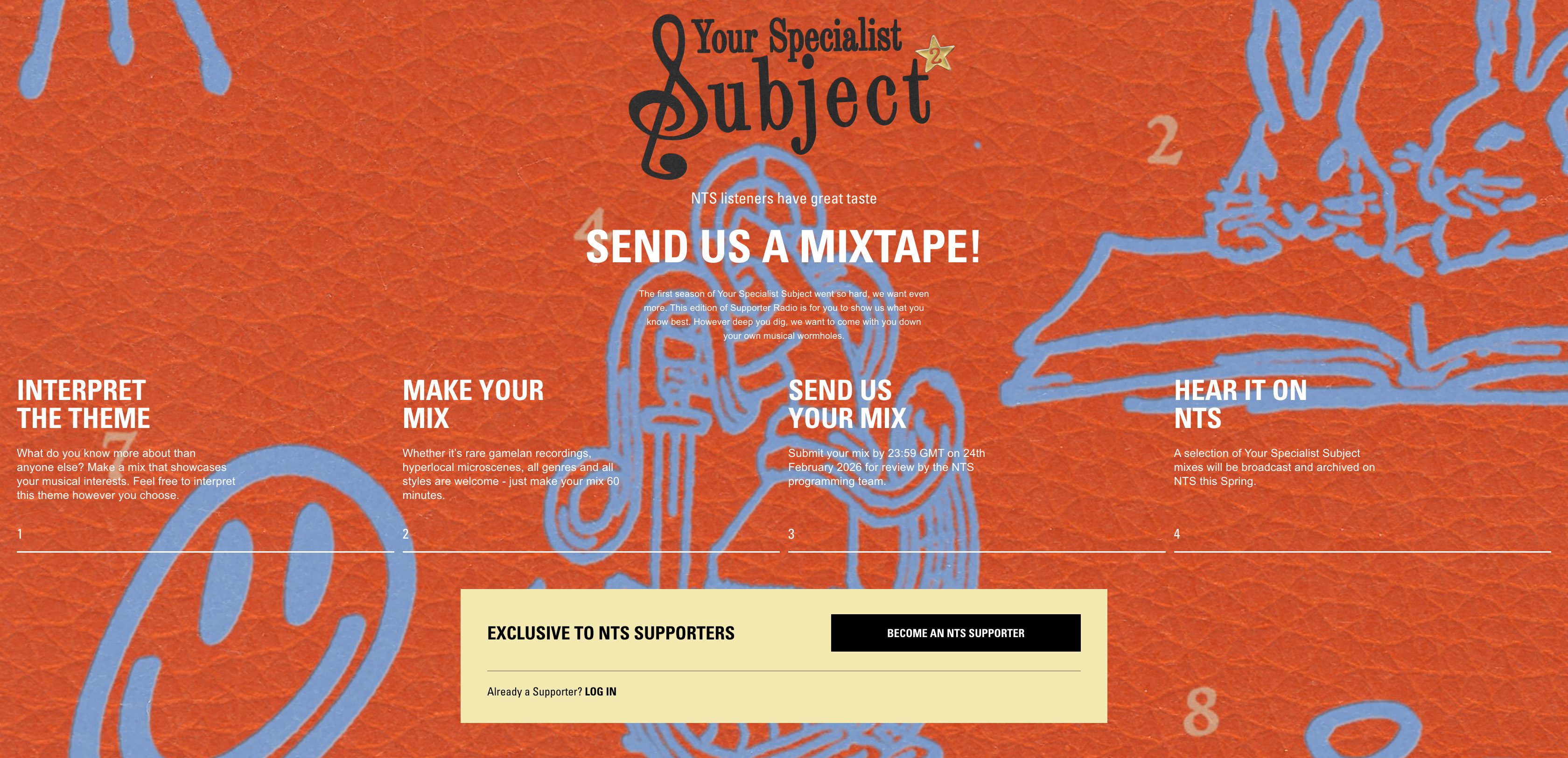
Alternatively, radio stations owners can combine creativity with audience insight to give a unique offering. For example, online radio station, NTS, profile their listeners as engaged, underground music fans, likely to enjoy playlist curation and music digging themselves. So, NTS offers paying supporters the opportunity to submit a mixtape on a set theme for their "Supporter Radio". Mixes are reviewed, selected and then aired on NTS. By tapping into what’s likely to excite listeners, NTS are able to turn this into a monetised opportunity, effectively selling the kudos of contributing to the station.
Leveraging 3rd Party Platforms
You don't need to be a website whizz or app developer to launch a membership area. The prevalence of supporter sites like Patreon means radio stations can launch their own subscription models in 2026. All without writing a single line of code. The likes of Patreon make it easy for stations to ring-fence exclusive content, offer "behind the scenes" access, and manage tiers of support.
9. The "Subs" Model
For community stations, "subs" act like an internal membership model. In this setup, hosts pay a set fee for their time slot. This money helps with the day-to-day costs of running a station. Think hosting fees, electricity, or even a dedicated social media manager to ensure the shows get the reach they deserve.

This isn't about selling your schedule to the highest bidder; it’s about a "we’re all in this together" mentality. When hosts benefit from your platform and equipment, contributing to the upkeep ensures the station remains a high-quality home for everyone.
8. Production Work
In 2026, many radio stations are no longer standalone entities. Instead, they often are just one arm of a larger operation, like a digital media outlet, a not-for-profit organisation, or a personal brand.
Radio professionals have always been used to wearing many hats, but 2026 will see station owners diversifying their services to keep the finances ticking along. This can range from hiring out your studio space to offering full-scale pre- and post-production services for external clients.
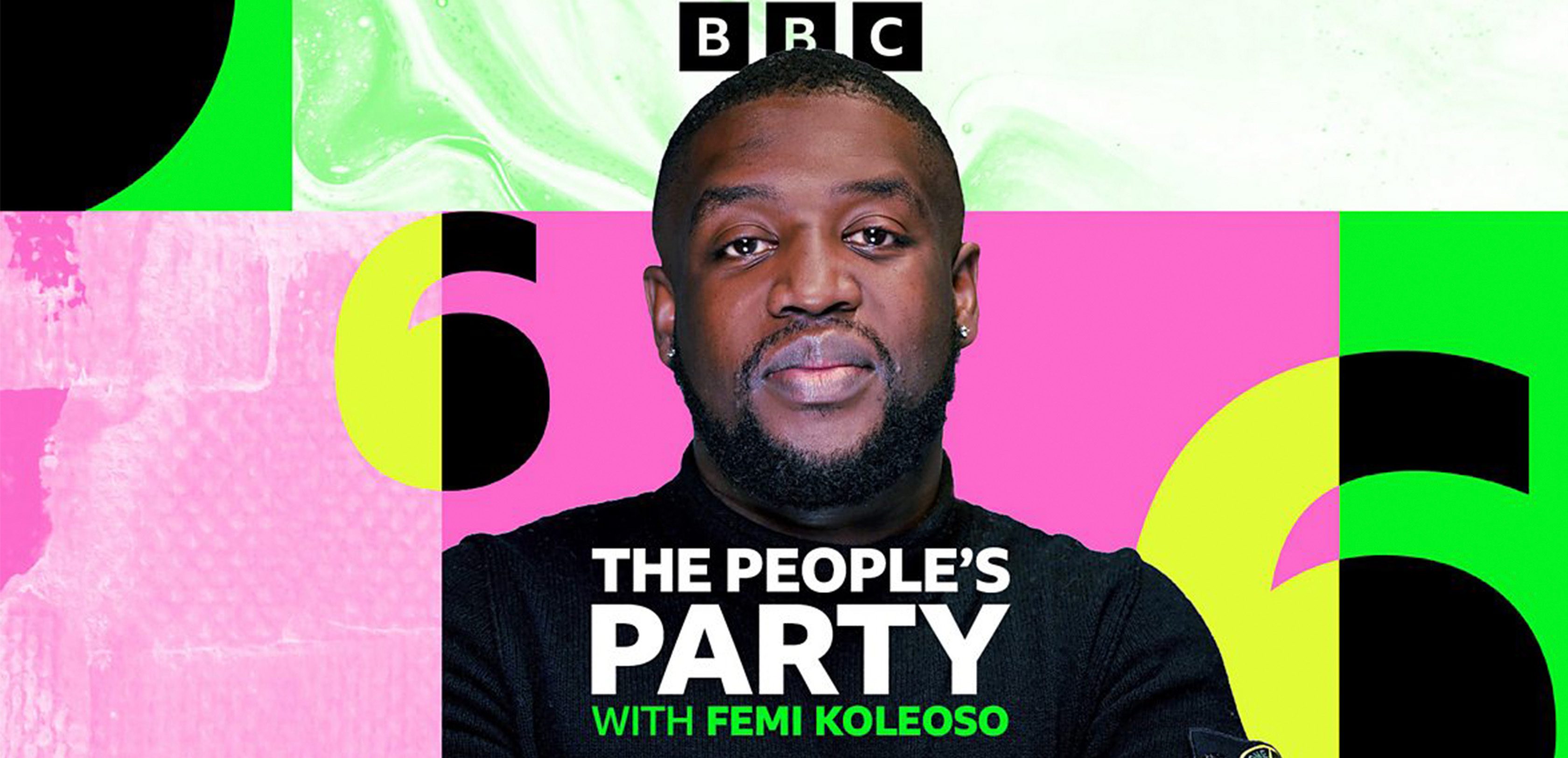
Take Reform Radio in Manchester as a prime example. As a not-for-profit, they support their mission by producing high-end content like The People’s Party for BBC Radio 6 Music.
7. Grants & Funding From Organisations
Reform Radio also demonstrates another opportunity for radio station owners in 2026: funding for specific projects. Reform Radio aims to:
"Engage young adults through creative, high-quality training and support them into meaningful employment."
They realise this mission through the likes of various creative skills workshops for young people, financed by a winning grant of £50,000 from Greater Manchester’s Combined Authority.
Similarly, in the US, stations can look to organisations like the John Templeton Foundation for funding for shows aligned with the foundation’s core values. Or the Alfred P. Sloan Foundation for funding if their radio projects involve innovative, science-focused storytelling.
It’s all about identifying your radio show's alignment with a benefactor’s mission. For radio station owners who believe in their content and project ideas, it’s worth exploring possible financial help to make them happen.
6. CrowdFunding
Crowdfunding, mainstream since the launch of platforms like Kickstarter and IndieGoGo in the late 00s, remains a viable revenue stream for radio stations in 2026. Using an online crowdfunding platform, radio stations set up their own campaign, outlying the figure they need and what this will cover. From here, members of the public can donate to the campaign. There are different settings to choose from - like if you offer ‘rewards’ for donations - allowing radio stations to really tailor their campaign.
These well-known platforms are good for big crowdfunding campaigns, like rent on a studio for a year. But platforms like Ko-Fi & Buy Me A Coffee are useful for regular, small donations from listeners.
5. Merch
If you’ve worked hard to develop a strong brand identity for your station, you’ve got yourself a great merchandise opportunity. You can keep it simple, like New York’s The Lot Radio and put your station’s logo and motto on good quality clothing and everyday items. Or take it further and collaborate with other brands or designers like how Brussel’s Kiosk Radio teamed up with artist Meryll Rogge.
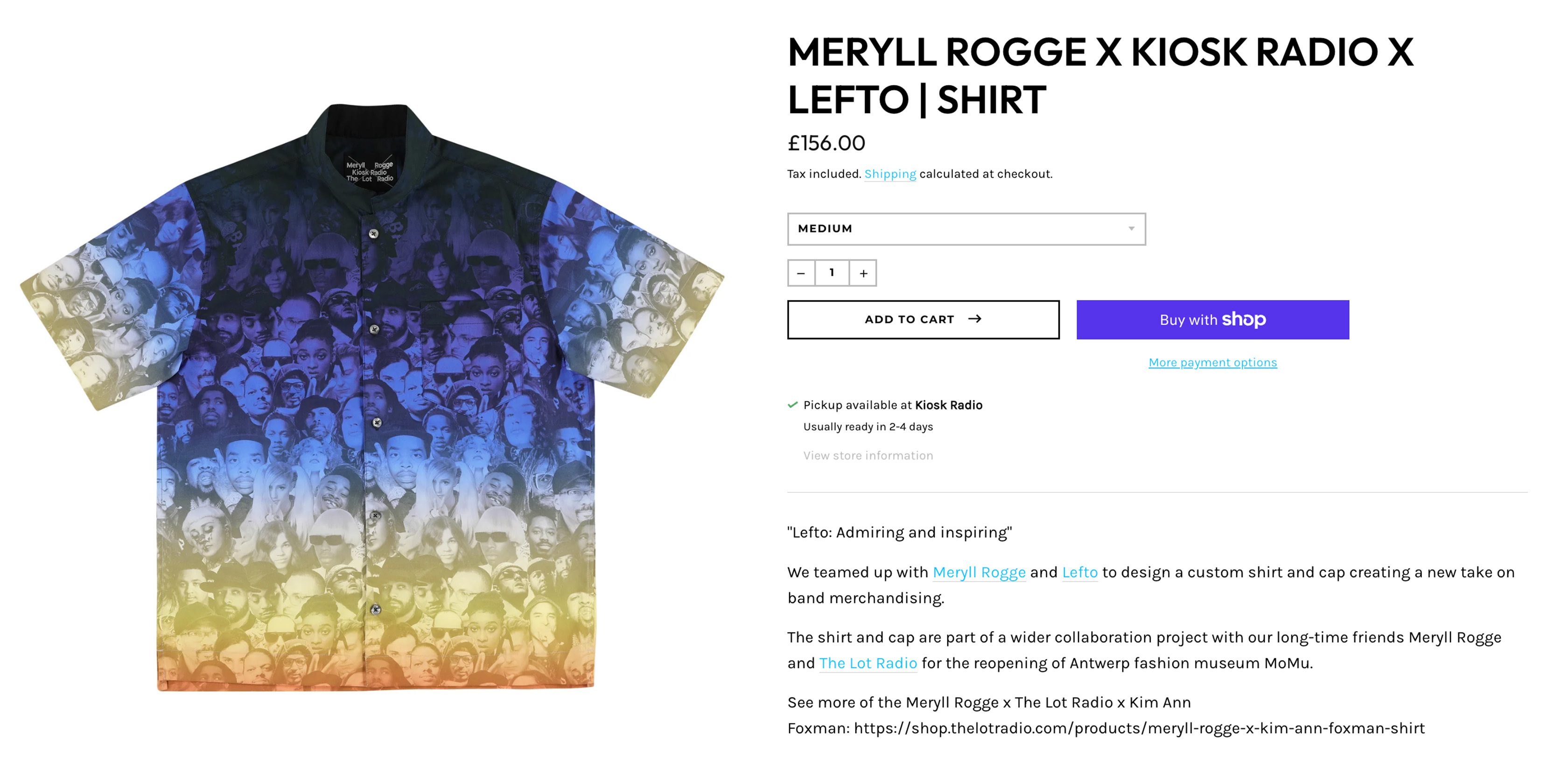
By partnering up with brands and designers, your merchandise can be coveted, fashionable items that listeners aspire to have. Doing this helps listeners buy into your community and show their fandom.
4. Branded Radio Shows
If traditional ads are the "record scratch" of radio, sponsored and branded content is the smooth transition. By 2026, this has become a cornerstone of station revenue.
Think about your peak moments: the breakfast show, the traffic reports, or the weather updates. These are the slots in your schedule where listener numbers are highest. Where traditional ads risk the listener tuning out, a sponsored segment feels like a natural part of the broadcast. It’s an effective strategy for reaching ears without too much of a sales-like interruption.
With Radio.co’s analytics, you can now see listener numbers drilled down to the exact minute. This data allows you to prove your value to brands, showing them exactly when your engagement peaks so you can price your sponsorships with confidence.
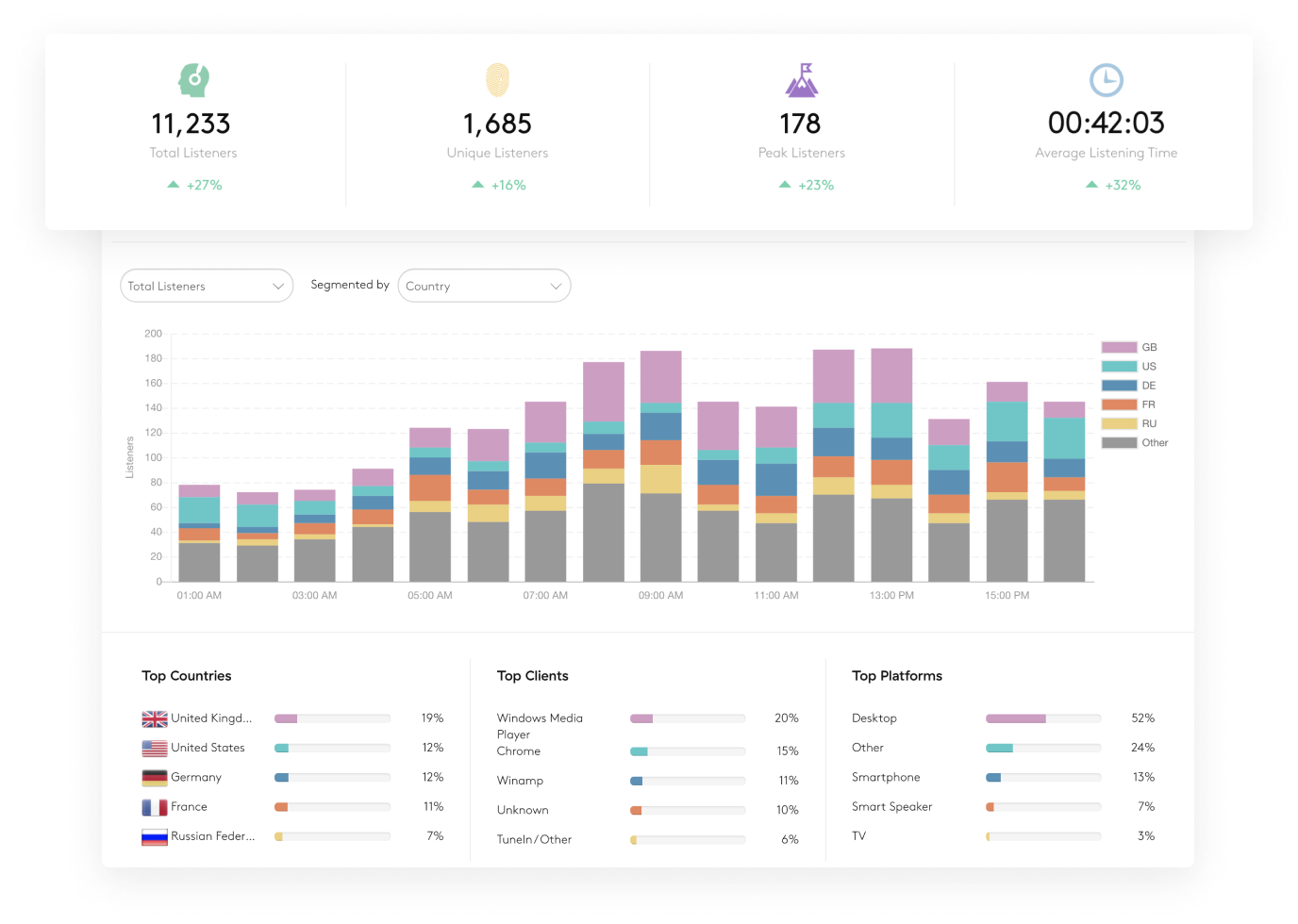
Once you’ve got your listener data, it’s all about finding products and services that are a good fit for your content and audience. In this case, radio shows and hosts with strong brand identities work particularly well for sponsorship. For example, American radio personality, Delilah, is a glamorous radio host who promotes positivity and love through life’s adversities. Another part of her brand is celebrating festivities with family and friends through homemade arts & crafts. There’s even the simple fact that she's often with a hot drink.

As such, Delilah’s radio show has been sponsored by brands that fit neatly into her identity: Laura Geller Cosmetics is behind her made-up appearance, Sonos made a fitting sponsorship for her holiday season shows and a Bigelow Tea sponsorship tells listeners exactly what she's drinking.
3. Underwriting
Underwriting remains a staple for non-commercial stations, and that’s not changing anytime in 2026. Usually following a "made possible by..." format, underwriting doesn’t have the same ‘buy-now’ feel of a traditional radio ad. Underwriting is more limited for brands and businesses, as listener-supported stations like WMNF follow strict rules as to what can and can’t be said in a slot.
The benefit for the underwriters is they still get their organisation in front of listeners, while the radio station skips the jarring adverts and has creative control over every minute of audio. Leading to a more pleasant, flowing experience for the audience.

No doubt WMNF’s underwriting is a success thanks to their solid Media Kit. A good media kit should be a single, easy-to-read file that distills your listener numbers, audience demographics, and underwriting rates in one place for businesses. This saves your time from pitching your radio station to every prospective underwriter, as well as letting the stats speak for themselves.
2. Host Read Integrations
Host-read integrations have proved so popular in podcast advertising, we expect radio stations to jump on this popular format in 2026. Really, they’re ideal for radio as they hinge upon the trust between the host and listener. And trust between these two parties is common when radio is done well.
The key is for radio hosts to seek sponsorships from products they truly use, rate and are happy to endorse. A host’s name & reputation is the value here, so don’t risk destroying that trust for the wrong product. Lose listener trust and you’ll lose the listener, and that reputational damage is hard to come back from.

1. Events, Live Broadcasts, & Ticketed Audio Experiences
Radio stations and events happily feed into each other in creating a community. Behind great radio stations are talented people making sure everything ticks over. And these people often have the right skillsets to produce top events and create a useful revenue stream for their stations.
Hosting special broadcasts in public places is one way radio stations can involve listeners, especially if you combine the broadcast with another event, preceding, during or after.
For example, as part of their “Fun Raiser” Portland’s Shady Pines Radio is hosting an event made up of a live broadcast, followed by bingo with their DJ.
Coupling your live broadcast with something else gives listeners further incentive to turn up to your event. And support your station through ticket, food and drink sales. What you put on is only limited by your imagination, but here’s a few ideas: speed dating, a crafting workshop, a games night or a Q&A with a local celebrity.
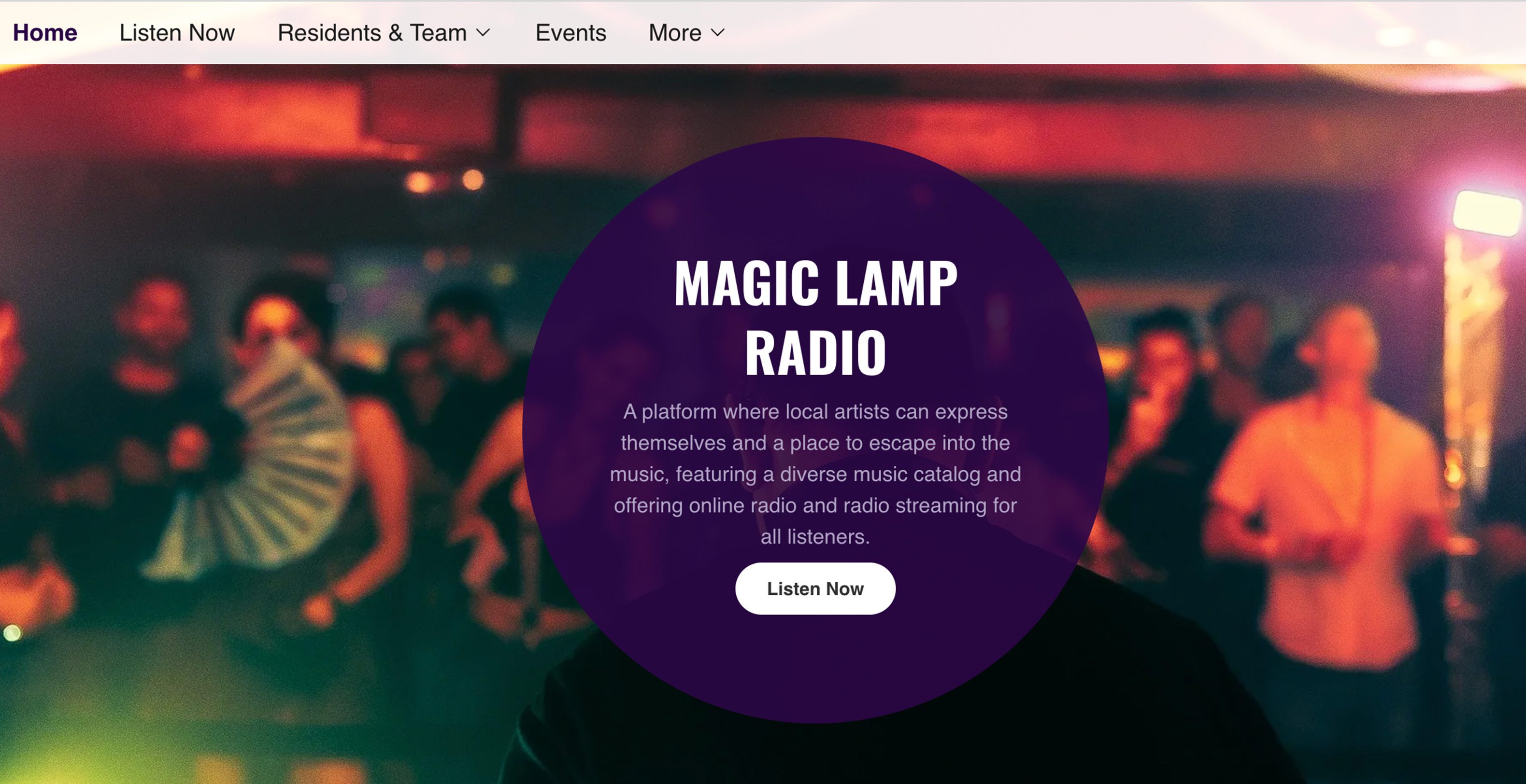
For Florida’s Magic Lamp Radio, events and the station go hand-in-hand. The station provides a platform for artists, while the events are designed for people (listeners, artists alike) to lose themselves in the music.
Likewise, Amsterdam’s Radio Radio is both a radio station and a nightclub/event space that runs weekly events. For Radio Radio and Magic Lamp Radio, events aren’t an afterthought. Their events and radio shows form integral parts of the music sharing ecosystem. Both have as much weight as each other, and mutually benefit each other.
This radio station and event set-up works well because they each satisfy different needs. Not many people can spend all their time in the club. Equally, radio doesn’t scratch the itch of a real life connection. But the radio station helps listeners buy into the community through live and on-demand content, and the event brings them into the same room.
Used together and you can build a bubbling community that backs your radio station. You’ll be blessed with attention for your radio content as well as financial support for your events.
Bonus: Radio Email Playbook
If you need help with pitching for funding and sponsorships, our Radio Email Playbook can help. $19 gets you the downloadable PDF, containing over 30+ email templates with proven marketing strategies to maximise open rates and click-throughs. Not only is it indispensable for reaching out to sponsors, but there are also templates to boost your station’s growth, including growing your audience and promoting your events.
Closing Thoughts
Not overly relying on one source of funding is key to achieving long-term sustainability for your station. There are plenty of strategies to choose from, ensuring every radio station owner can pick the right revenue streams for them. How will your radio station be making money in 2026? Share this article and let us know on Facebook, Instagram, LinkedIn or TikTok.


